


Tree felling and cutting
- Moulin des Etrebières
- 4 January 2026
- 1:24 p.m.
- 0 comments
Progress of the works
An old oak tree fell in the wet meadow during the storm in December 2024. Along the road, nine poplar trees have reached maturity and are in danger of falling soon. They are overgrown with mistletoe and the sap flow has already begun in some of them. The company Bocasèvre has been commissioned to fell the trees, Valdéfys to grind them up and the mobile sawmill to cut the wood.
Step 1: felling
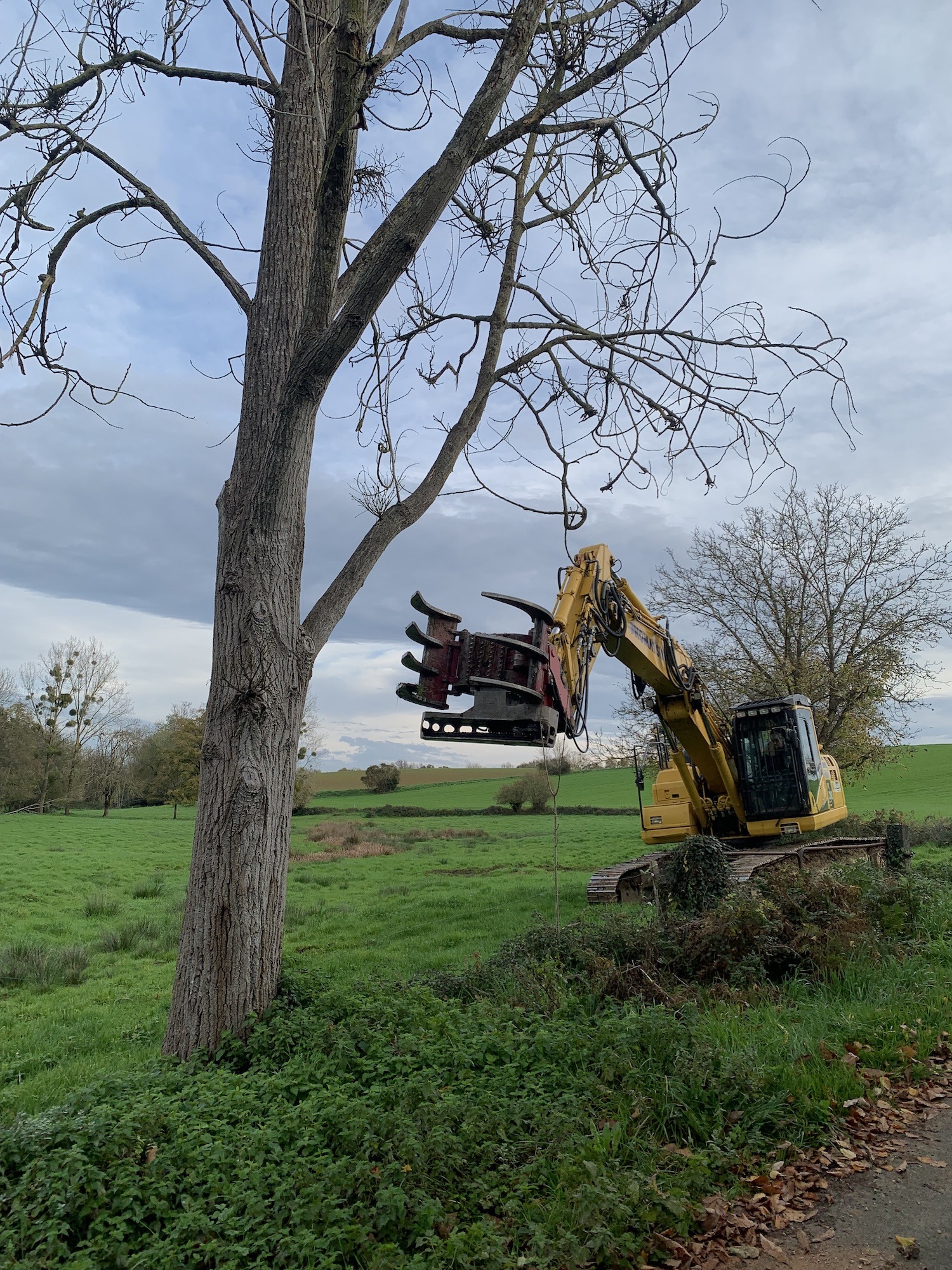
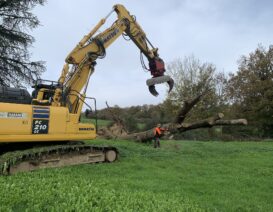
A tracked vehicle with a large claw attached to a chainsaw grabs the large lower branches and breaks or cuts them. It then cuts off the top of the tree (the crown) and deposits it on the grassland to be cut up or shredded.
The clamp holds the trunk in place while the technician neatly cuts off the base. This allows the tree to fall in a specific direction, or even to be lifted and positioned in the desired location.
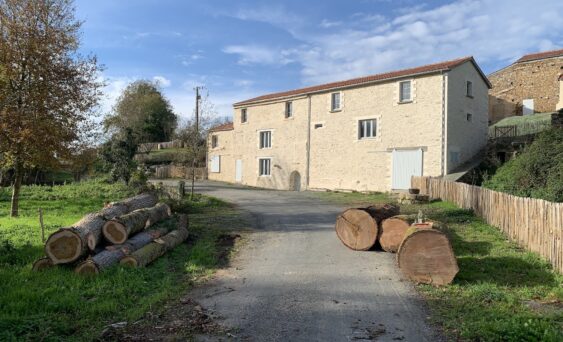
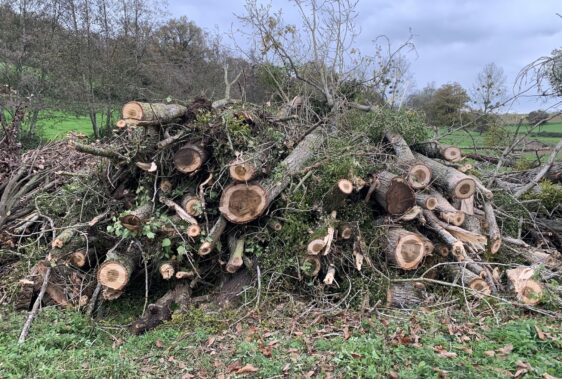
The log is then cut into sections approximately 3 metres long. These sections are placed at the side of the road so that the mobile sawmill can come and collect them a few days later.
Step 2: Transforming the crowns
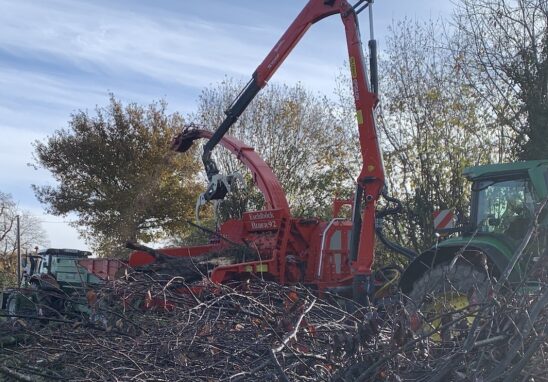
The pile of tree tops is shredded by Valdéfys, except for some large branches that are cut into logs for the wood stove in the cottage.
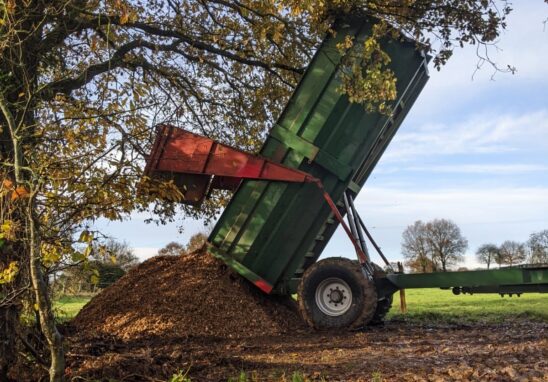
A claw hangs from the end of an arm (a bit like in fairground games where you have to grab a soft toy ;-)). The claw grabs a pile of branches and drops them into the mouth of the shredder, which reduces the wood to chips that are spat out into a trailer.
Even very large tree trunks can be shredded in this machine. It's very impressive. The shredded material is stored in piles for use in the garden, vegetable patch and orchard. The aim is to keep all the organic matter on site so that it can return to the soil.
Step 3: Cutting the logs
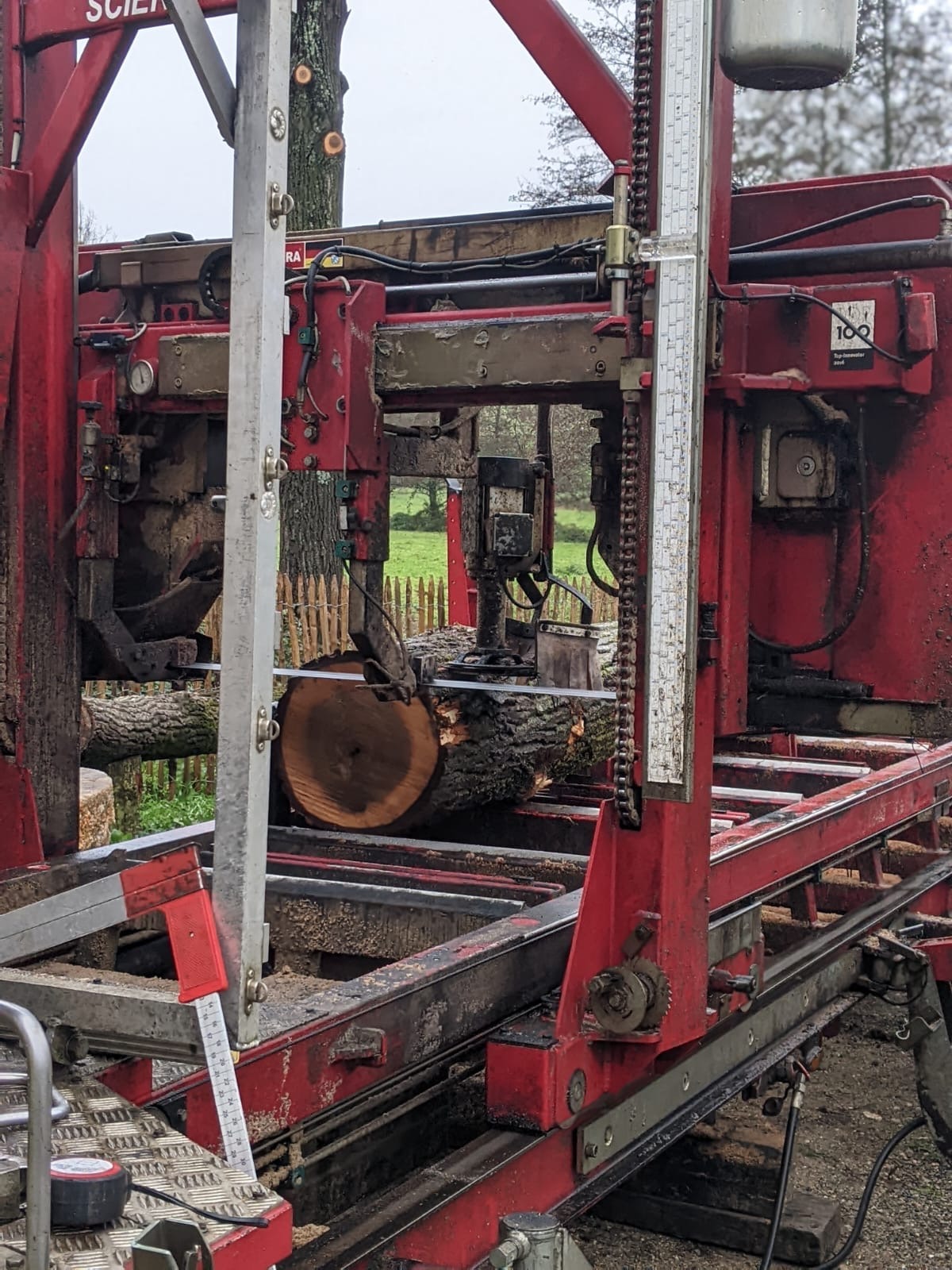
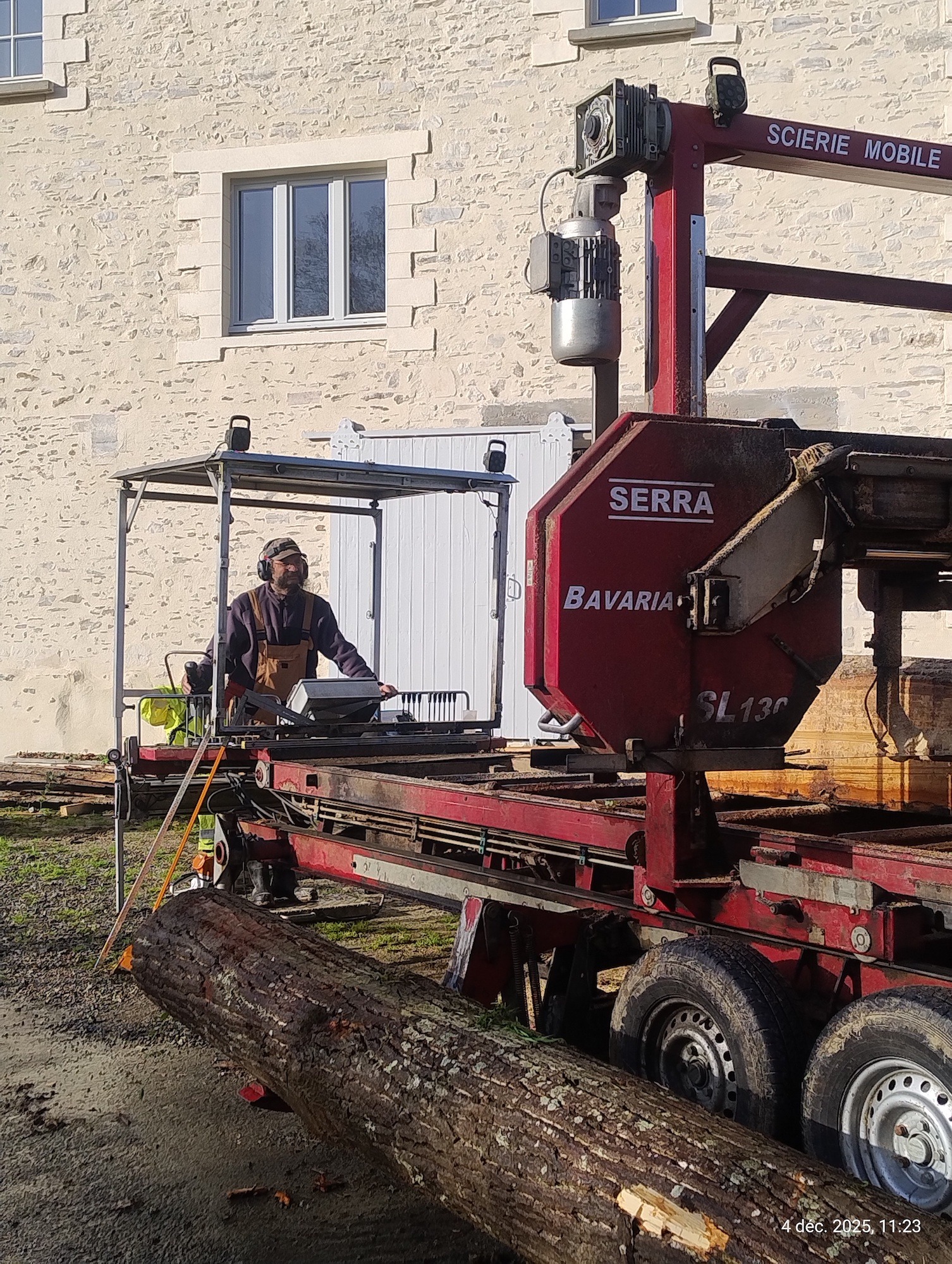
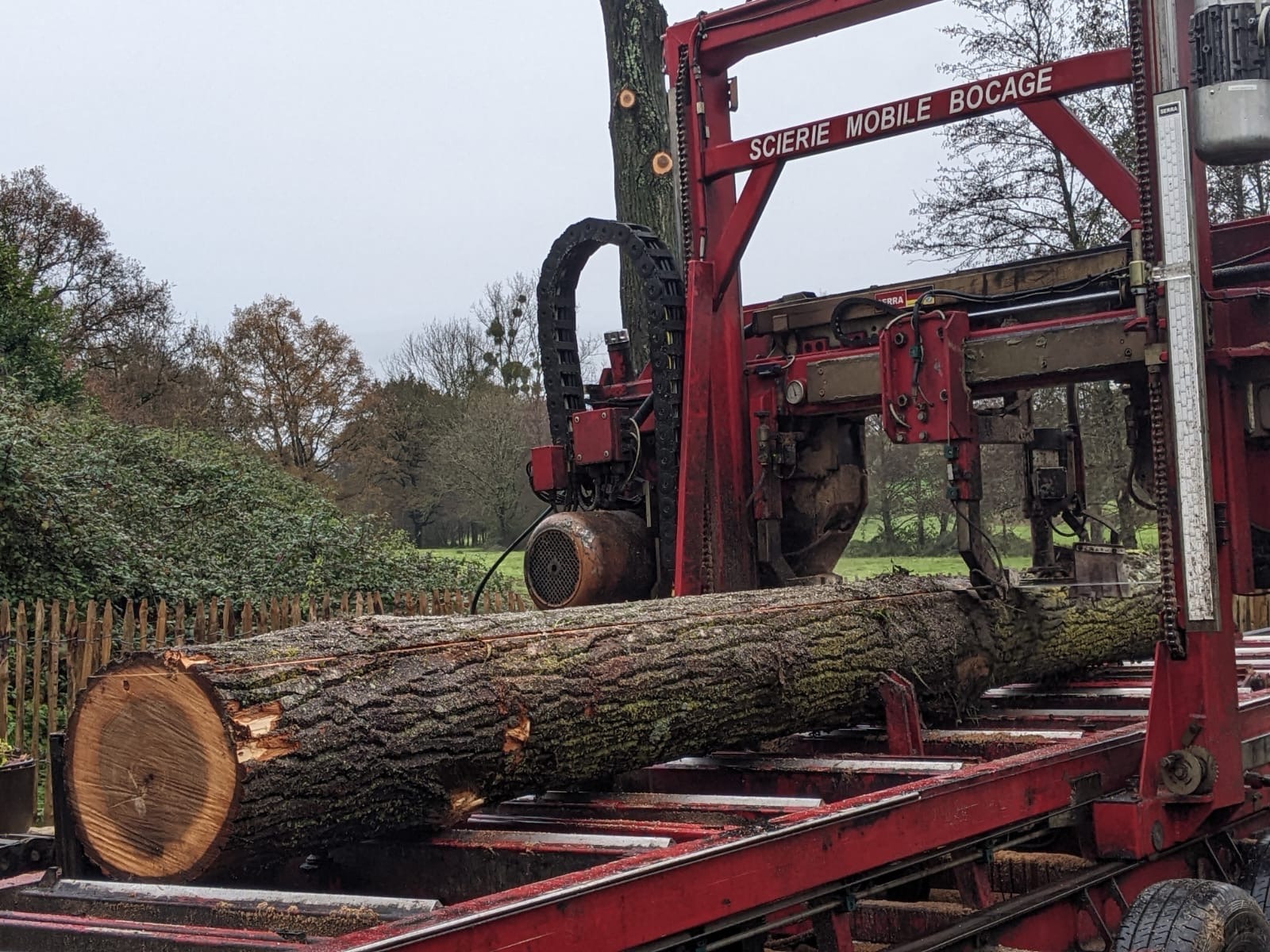
The mobile sawmill arrives a few days later. It fits on a trailer pulled by a van. Cutting is done using a horizontal band saw.
The logs are handled by a series of jacks that rotate the piece to position it precisely in order to maximise the usable volume of wood and obtain straight planks.
A tractor approaches the log at the sawmill and three arms lift the piece (weighing up to two tonnes) to place it on the frame. Then the jacks take over to position the log. The saw is positioned at the exact height using a mark on a millimetre ruler to the right of the operator.
In total, the saw will cut nearly 16 m3 of wood for the hamlet's carpentry and cladding projects.
Step 4: Tidying up
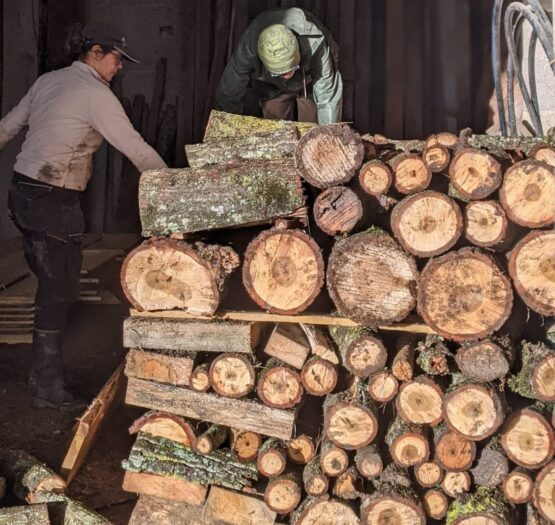
Firewood is stored and must dry for two years before being burned.
The shredded material is stored in piles for use on crops.
Sawdust is also collected for use as garden mulch.
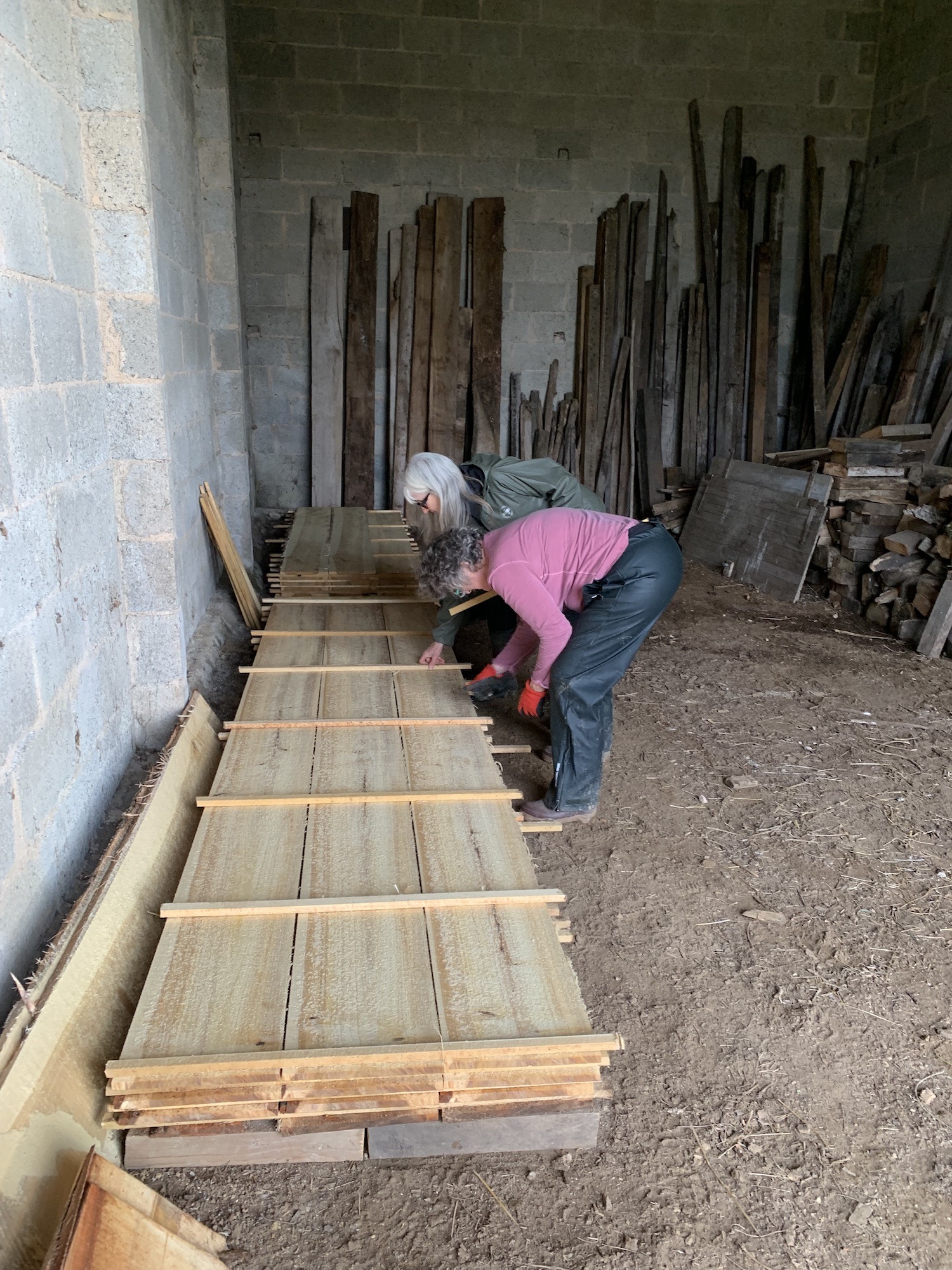
The boards are stored in a sheltered place, lying flat, separated by battens so that each board can dry evenly.
Step 5: Use
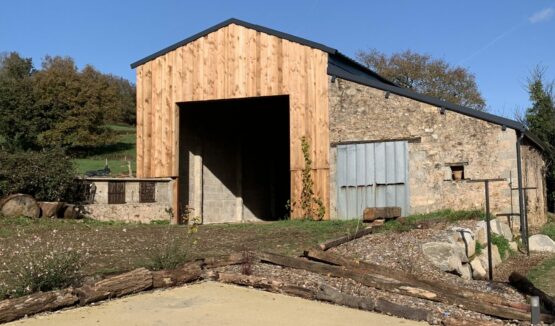
Now you have to wait for the wood to dry. If it is to be used inside a house, you have to wait two years. If it is to be used outdoors, it can be used as early as spring.
We have plans to clad the hangar, repair the roof structures of the pigsty and henhouse, and repair the doors, gates, and barriers in the hamlet.
Some of the trays can also be used as outdoor tables to enjoy the view of the wooded countryside and the meadow crossed by a stream.
The oak tree that fell in the storm
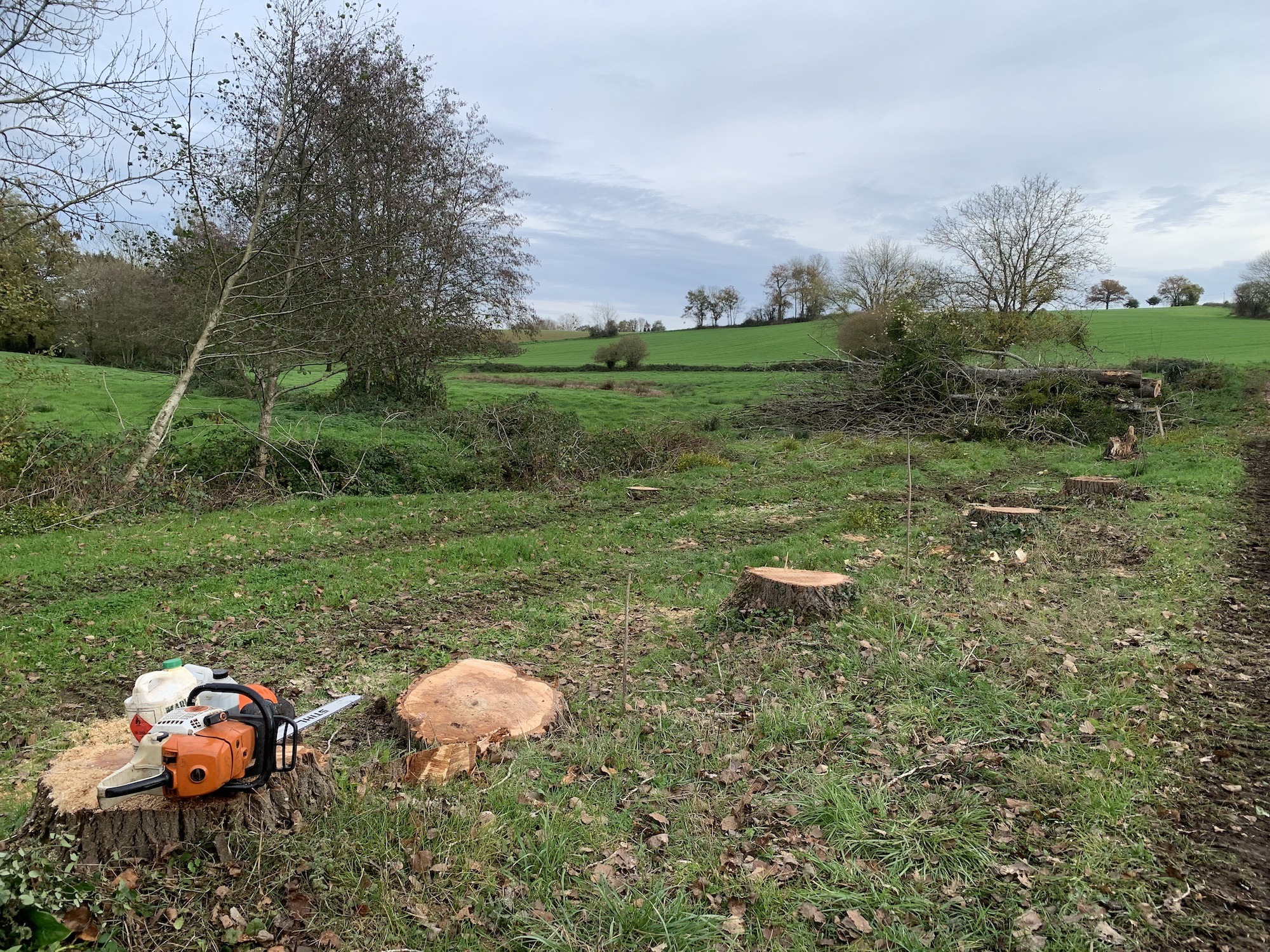
Poplar stumps
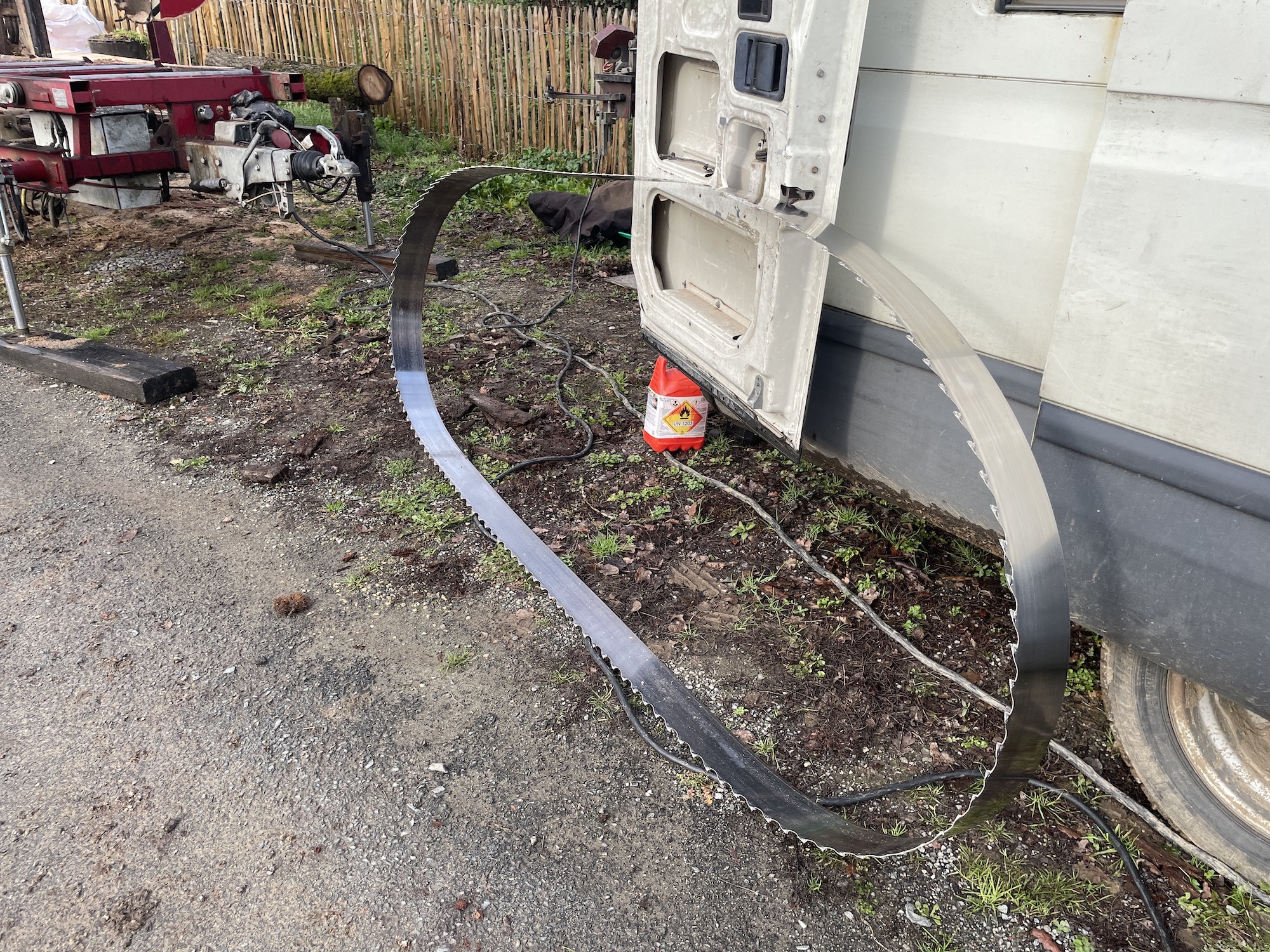
The band saw
The tractor carries the planks
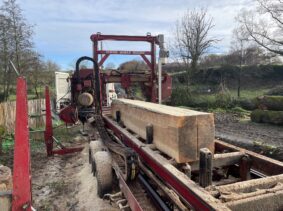
The sawmill and its jacks
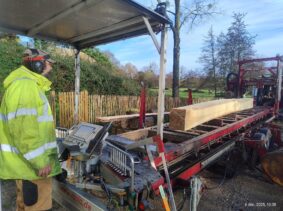
The operator at his post
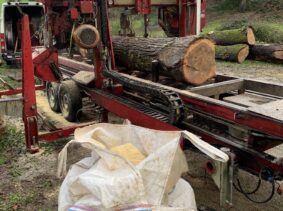
The sawdust is recovered.
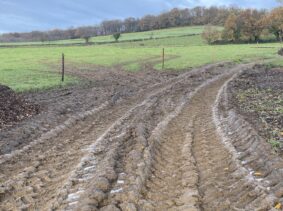
The damage caused by coming and going
 EN
EN  FR
FR